Where To Download Reassembly Game For Free UPDATED

Where To Download Reassembly Game For Free

Introduction

Follow this guide to supersede a broken or faulty fan in the Nintendo Switch game console.

Note: When you remove the shield plate, you'll need to supersede the thermal compound between the plate and the heatsink. Since normal thermal paste isn't designed to span large gaps, the closest replacement is K5 Pro pasty thermal paste.

Note: This guide, and the part we sell, are compatible with the original Nintendo Switch model released in 2017, as well as the newer refreshed model released in 2019 (model numbers HAC-001 and HAC-001(-01), respectively).

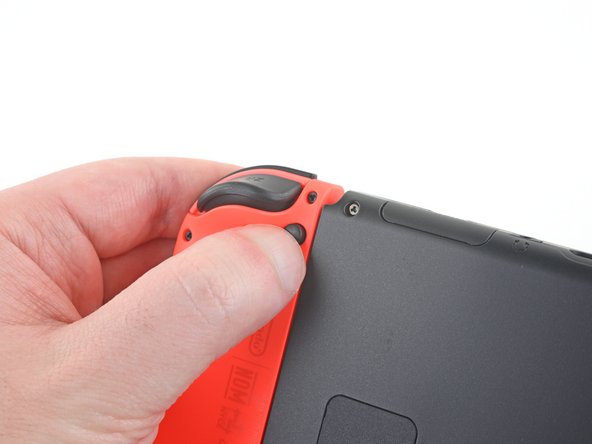
  1. Before you begin this repair, make sure the device is completely powered off. Press and hold down the small round button on the back of the Joy Con controller. While you hold down the button, slide  the controller upward.

    • Before you begin this repair, brand sure the device is completely powered off.

    • Press and hold down the minor round button on the dorsum of the Joy Con controller.

    • While you concur down the button, slide the controller upward.

  2. Continue sliding the Joy Con upward until it's completely removed from the console. Repeat this same process for the other Joy Con. Repeat this same process for the other Joy Con.

    • Proceed sliding the Joy Con up until information technology's completely removed from the console.

    • Repeat this same process for the other Joy Con.

    • Use a Y00 screwdriver to remove the iv vi.3 mm-long screws securing the rear panel.

    • Throughout this repair, keep track of each screw and make certain it goes back exactly where it came from.

  3. Use a JIS 000 screwdriver to remove the following screws securing the rear panel: One 2.5 mm-long screw on the top edge of the device

    • Use a JIS 000 screwdriver to remove the following screws securing the rear panel:

    • One two.5 mm-long screw on the summit edge of the device

    • Two ii.5 mm-long screws on the bottom edge of the device

    • If you don't have a JIS screwdriver, you can use a Phillips screwdriver in a pinch. Be very careful, equally a Phillips driver can easily cam out and strip the screwhead.

  4. Use a JIS 000 screwdriver to remove the two 3.8 mm center screws on the sides of the device (one on each side). Use a JIS 000 screwdriver to remove the two 3.8 mm center screws on the sides of the device (one on each side).

    • Use a JIS 000 screwdriver to remove the two 3.8 mm center screws on the sides of the device (one on each side).

  5. Use your finger to flip up the kickstand on the back of the device. If there's a microSD card in the microSD card slot, remove it now before you continue to the next step.

    • Use your finger to flip up the kickstand on the dorsum of the device.

    • If at that place's a microSD menu in the microSD card slot, remove it now before yous continue to the next step.

  6. Use a JIS 000 screwdriver to remove the 1.6 mm screw in the kickstand well.

    • Employ a JIS 000 screwdriver to remove the 1.6 mm screw in the kickstand well.

    • Close the kickstand.

  7. Open the game card cartridge flap. The game card cartridge flap attaches to the other half of the plastic shell, preventing you from completely lifting up the rear panel if it's closed. Lift the rear panel up from the bottom of the device and remove it.

    • Open the game menu cartridge flap.

    • The game card cartridge flap attaches to the other half of the plastic shell, preventing you from completely lifting upward the rear panel if it'southward airtight.

    • Lift the rear panel upwards from the bottom of the device and remove it.

  8. Use a JIS 000 screwdriver to remove the 3.1 mm screw securing the microSD card reader to the device.

    • Use a JIS 000 screwdriver to remove the 3.1 mm spiral securing the microSD card reader to the device.

  9. Use your fingers or a pair of tweezers to lift the microSD card reader straight up from the device to disconnect and remove it. During reassembly, make sure the press connector underneath the foam pad is firmly connected to the motherboard. It may help to remove the foam pad before reinstalling the card reader.

    • Use your fingers or a pair of tweezers to elevator the microSD card reader straight up from the device to disconnect and remove it.

    • During reassembly, make certain the press connector underneath the foam pad is firmly connected to the motherboard. Information technology may aid to remove the foam pad before reinstalling the card reader.

  10. Use a JIS 000 screwdriver to remove the six 3 mm screws securing the shield plate to the device.

    • Use a JIS 000 screwdriver to remove the six 3 mm screws securing the shield plate to the device.

  11. Use your fingers or a pair of tweezers to peel back the piece of foam on the top edge of the device near the fan exhaust port. If the foam doesn't easily peel away, don't force it as it might end up tearing. Carefully peel at different spots to pull back the foam.

    • Use your fingers or a pair of tweezers to pare back the piece of foam on the top edge of the device near the fan exhaust port.

    • If the cream doesn't easily skin away, don't forcefulness it every bit information technology might end upwardly fierce. Carefully peel at dissimilar spots to pull dorsum the foam.

  12. Insert a spudger underneath the shield plate along the edge of the device. Pry up to lift the shield plate and remove it from the device. You may feel a bit of resistance. This is normal, since the shield plate is slightly bonded to the heat sink with thermal paste.

    • Insert a spudger underneath the shield plate along the edge of the device.

    • Pry up to elevator the shield plate and remove it from the device.

    • Y'all may feel a scrap of resistance. This is normal, since the shield plate is slightly bonded to the heat sink with thermal paste.

    • A thick pinkish thermal compound bridges the gap between the shield plate and the copper rut sink underneath. Whenever the shield plate is removed, refer to our thermal paste guide to remove the quondam thermal compound and supervene upon it with an appropriate compound, such as K5 Pro, during reassembly.

  13. Use the point of a spudger to pry the battery connector straight up and out of its socket on the motherboard. Use the point of a spudger to pry the battery connector straight up and out of its socket on the motherboard.

    • Use the point of a spudger to pry the bombardment connector straight up and out of its socket on the motherboard.

  14. Use a JIS 000 screwdriver to remove the three 3 mm screws securing the heat sink to the motherboard.

    • Use a JIS 000 screwdriver to remove the iii iii mm screws securing the oestrus sink to the motherboard.

    • Advisedly skin the two foam pieces stuck over both the heatsink and the fan away from the fan.

    • The cream only needs to be peeled back plenty to clear the fan.

    • The foam is actually delicate and tears easily. Employ the following technique to peel the foam:

    • Insert the signal of a spudger underneath the part of the foam that isn't stuck against annihilation,

    • Press the top of the foam with your finger to agree it in place.

    • Roll the spudger tip underneath the cream all the mode to the other stop of the cream to release it.

  15. Use a spudger or your fingers to lift the heatsink up and off the motherboard to remove it. You may feel a bit of resistance. This is normal, since the heat sink is slightly bonded to the CPU with thermal paste. Clean off the old thermal paste from the heat sink and CPU using high-concentration (90% or higher) isopropyl alcohol and a microfiber cloth. Apply new thermal paste to the CPU before reassembly.

    • Use a spudger or your fingers to lift the heatsink up and off the motherboard to remove it.

    • You may feel a bit of resistance. This is normal, since the heat sink is slightly bonded to the CPU with thermal paste.

    • Clean off the old thermal paste from the heat sink and CPU using loftier-concentration (90% or higher) isopropyl booze and a microfiber cloth. Apply new thermal paste to the CPU earlier reassembly.

  16. Use an opening tool or your fingernail to flip up the small, hinged locking flap on the digitizer cable's ZIF connector. Use an opening tool or your fingernail to flip up the small, hinged locking flap on the digitizer cable's ZIF connector.

    • Use an opening tool or your fingernail to flip upward the small-scale, hinged locking flap on the digitizer cable's ZIF connector.

  17. Use a pair of tweezers to slide the digitizer cable horizontally out of its connector on the game card reader board. Use a pair of tweezers to slide the digitizer cable horizontally out of its connector on the game card reader board.

    • Use a pair of tweezers to slide the digitizer cable horizontally out of its connector on the game carte du jour reader lath.

  18. Use the point of a spudger to pry the headphone jack and game card reader connector straight up to disconnect it from the motherboard. Use the point of a spudger to pry the headphone jack and game card reader connector straight up to disconnect it from the motherboard.

    • Use the point of a spudger to pry the headphone jack and game card reader connector direct upward to disconnect it from the motherboard.

  19. Use a JIS 000 screwdriver to remove the three 3.1 mm screws securing the headphone jack and game card reader board to the device.

    • Use a JIS 000 screwdriver to remove the 3 three.1 mm screws securing the headphone jack and game carte reader lath to the device.

  20. Use a pair of tweezers or your fingers to remove the headphone jack bracket. Use a pair of tweezers or your fingers to remove the headphone jack bracket.

    • Employ a pair of tweezers or your fingers to remove the headphone jack bracket.

  21. Use a pair of tweezers or your fingers to remove the headphone jack and game card reader board. Use a pair of tweezers or your fingers to remove the headphone jack and game card reader board.

    • Use a pair of tweezers or your fingers to remove the headphone jack and game bill of fare reader board.

  22. Use an opening tool, spudger, or your fingernail to flip up the small, hinged locking flap on the fan cable ZIF connector. Use an opening tool, spudger, or your fingernail to flip up the small, hinged locking flap on the fan cable ZIF connector.

    • Apply an opening tool, spudger, or your fingernail to flip up the small, hinged locking flap on the fan cable ZIF connector.

  23. Use a pair of tweezers to pull the fan cable straight out of its connector on the motherboard. Use a pair of tweezers to pull the fan cable straight out of its connector on the motherboard.

    • Use a pair of tweezers to pull the fan cable directly out of its connector on the motherboard.

  24. Use a JIS 000 screwdriver to remove the three 4.8 mm screws securing the fan.

    • Use a JIS 000 screwdriver to remove the 3 4.eight mm screws securing the fan.

  25. Use a pair of tweezers or your fingers to lift the fan straight up and remove it from the device. Compare your new replacement part to the original part. You may need to transfer remaining components (such as the rubber bushings) to the new part before installing.

    • Use a pair of tweezers or your fingers to lift the fan straight upwardly and remove it from the device.

    • Compare your new replacement part to the original part. You may need to transfer remaining components (such equally the rubber bushings) to the new office before installing.

Team

Embed this guide

Cull a size and re-create the lawmaking beneath to embed this guide as a small widget on your site / forum.

Preview

DOWNLOAD HERE

Posted by: mageebotinquiered1937.blogspot.com

Post a Comment

0 Comments